Patient billing: correct ≠ clear
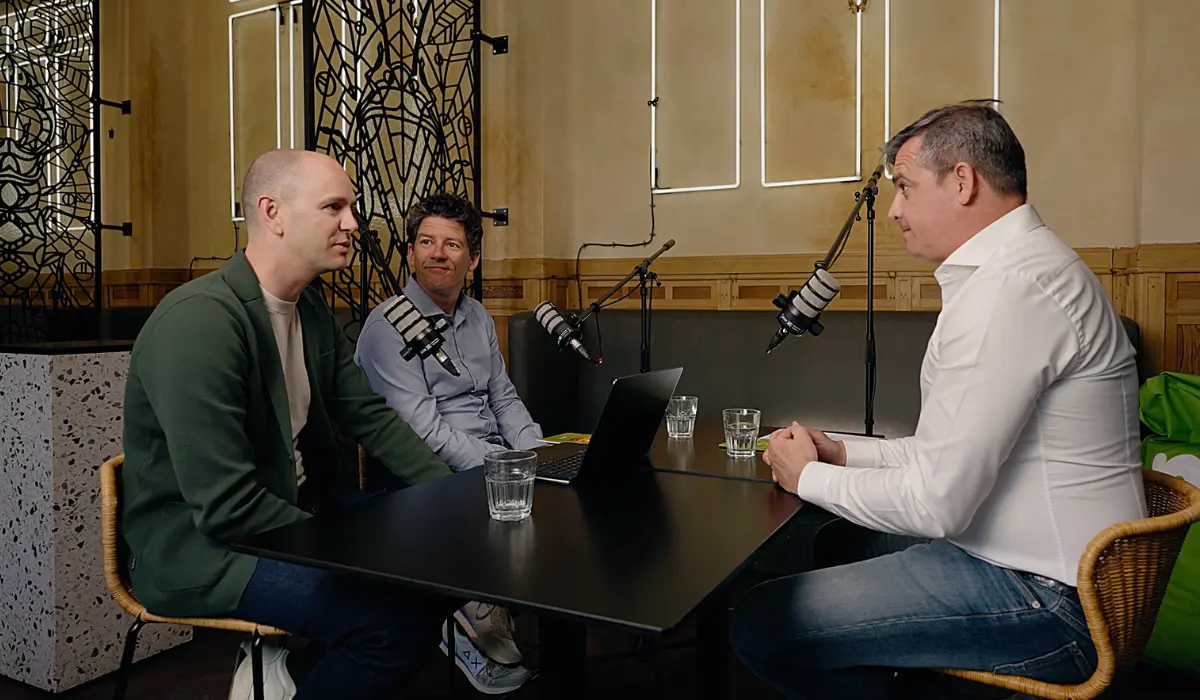
An invoice can contain all the necessary information and still raise questions. What exactly am I paying for? How much do I need to pay? By when? And how? This is particularly challenging in healthcare. A hospital bill contains a lot of legally required information, but not all of it is equally relevant to the patient. They primarily want to quickly understand what is expected of them. So, how do you make sure the key information doesn’t get lost? In the latest episode of the POMcast we discussed this with Gerd Brans, product owner at Obasi, which provides software to psychiatric hospitals.
In addition to the amount the patient needs to pay, a hospital bill also includes items such as co-payments, supplements, and amounts reimbursed by health insurance funds, care funds, or other organisations. As a result, it is not always easy to see at a glance what the patient needs to do. Essential payment information can sometimes be found only at the bottom or on the back of the document.
A number of psychiatric hospitals affiliated with Obasi were already using a cover letter to make this information clearer. However, each hospital used its own layout and template. This led to a great deal of variation and made the process prone to errors.
Together with POM, Obasi therefore looked for a more uniform approach.
Cover letter for the invoice
Because the official hospital invoice leaves little room to restructure the information, greater emphasis was placed on the cover letter.
On it, the patient can clearly see what the invoice relates to, how much they need to pay, and how to do so. The contact details for the billing department are also clearly displayed, so patients with questions immediately know who to contact.
This does not eliminate the complexity of the official invoice. However, it does make the most important information much easier to find.
But a clear invoice is only part of the story. It's also about what the patient can do with it. The path to payment should also be as simple as possible for the patient.
From manual dispatch to one centralised process
This was another major challenge for the hospitals.
Previously, paper invoices were largely printed, folded, and sent by post by the hospitals themselves. Digital dispatch also required a lot of manual work: drafting an email, attaching the invoice and any supporting documents, sending them securely, and checking whether the email had been delivered.
Together with POM, that process was centralised and further automated.
The billing department compiles the invoices and sends them from the Obasi platform to POM for further processing and dispatch. From there, both paper and digital communication flows are supported.
For a paper invoice, the cover letter includes a QR code that allows the patient to pay immediately. Those who receive the invoice digitally can use a payment button to go straight to the payment.
This simplifies the process for both sides: less manual work for the billing department and a straightforward payment experience for the patient.
OPZ Geel as the first pilot hospital
In the meantime, this approach is being put into practice. Nine psychiatric hospitals have joined the project, with OPZ Geel going live with POM as the first pilot hospital in June.
The first results followed quickly. By early September, 38% of invoices were paid via the QR code. In addition, 20% of patients opted to receive future invoices digitally.
The process has also become easier for the billing department. Where sending invoices previously required several manual steps, it is now centralized, and follow-up can be managed from a single dashboard.
Clarity makes the difference
A correct invoice is not necessarily a clear one. The challenge lies in translating all that information into something the patient can easily act on: presenting the right information clearly and making the next step as simple as possible.
🎙️ Curious about Gerd's insights and the steps Obasi is taking together with POM? Listen to the latest episode of the POMcast (in Dutch) on YouTube, Spotify or Apple Podcasts.